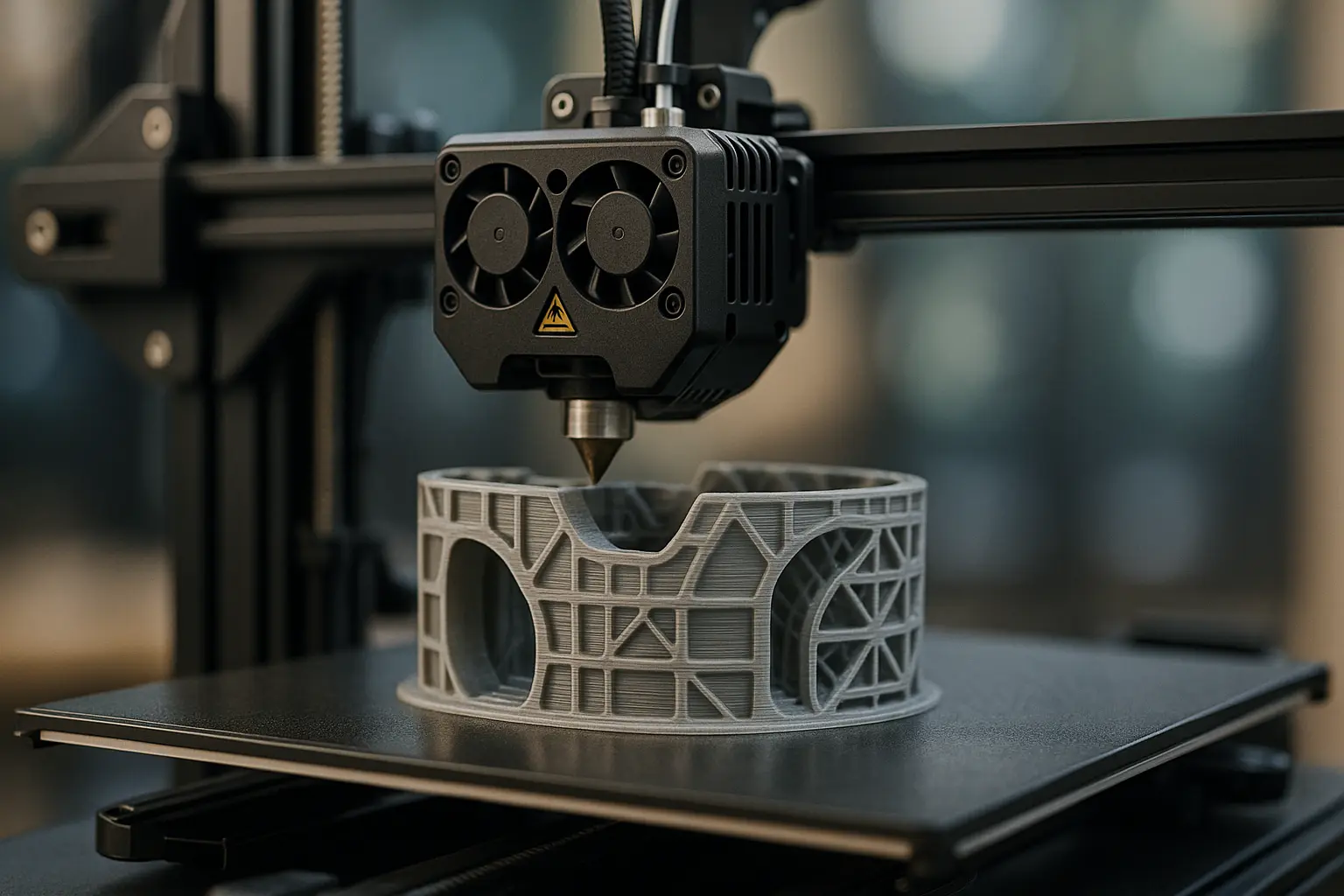
3D printing revolution: customization and rapid prototyping in manufacturing
In today’s fast-paced industrial landscape, we stand on the brink of a new era. 3D printing is transforming how we approach manufacturing, creating an unprecedented paradigm shift in design and production processes. Gone are the days when intricate parts and products required elaborate machinery and labor-intensive techniques. Instead, we now embrace the power of additive technology—a marvel that allows us to create, prototype, and innovate with remarkable efficiency.
Join us as we dive into the world of 3D printing, exploring its impact on various industries, the materials we use, and the endless possibilities it offers. Our exploration will illuminate how this technology fosters customization, rapid prototyping, and ultimately reshapes the future of production.
The Alchemy of Additive Technology
As manufacturers, we’ve always sought ways to streamline production while maintaining high-quality standards. Enter 3D printing, an ingenious method enabling us to build objects layer by layer, much like assembling a product from the ground up. This method not only reduces waste but also opens new doors for design innovation.
Additive manufacturing transforms traditional production by offering unprecedented flexibility. Instead of being constrained by standard molds or tools, we can now create unique parts and prototypes with ease. From complex geometries to intricate details, the possibilities are limitless.
Moreover, the usability of various materials—including plastics, metals, and composites—broadens the spectrum of applications. From the automotive sector to healthcare, industries everywhere are leveraging this technology to revolutionize their processes.
The charm of 3D printing lies in its ability to prototype rapidly. We can iterate on designs much faster than ever before, testing new concepts and refining products in less time. This ability to experiment freely encourages innovation, driving us toward solutions that were previously unthinkable.
In essence, additive technology is more than just a tool; it’s a catalyst for creativity. As we continue to harness its power, the boundaries of manufacturing will only expand further.
Customization: Tailoring the Future
In an age where individuality reigns supreme, customization has become a cornerstone of modern manufacturing. With 3D printing, we can cater to unique consumer needs, offering personalized solutions that traditional techniques simply can’t match.
Imagine walking into an auto showroom and customizing a car from the ground up. By leveraging additive manufacturing, this fantasy becomes a reality. Automotive companies can now craft bespoke components, designing interiors and exteriors tailored to individual preferences. These personalized vehicles not only reflect the owner’s identity but also pave the way for more intimate consumer-producer relationships.
Similarly, in healthcare, personalized prototyping goes beyond aesthetics. From custom prosthetics to patient-specific implants, 3D printing ensures that medical devices fit perfectly, enhancing comfort and efficacy. By analyzing patient data, we can create solutions that were once unimaginable.
Moreover, customization extends to architecture and product design. Whether it’s bespoke furniture or tailored home decor, businesses can now offer unique experiences to their clientele, delivering products that resonate on a personal level.
The allure of 3D printing lies in its ability to break free from the confines of mass production. We can now engage consumers in the design process, creating products that hold sentimental value—one layer at a time.
Rapid Prototyping: The Speed of Innovation
In the race to innovate, time is of the essence. Rapid prototyping through 3D printing enables us to bring ideas to life faster than ever before. We no longer need to wait weeks for a prototype; with additive manufacturing, it can be ready in a matter of hours.
This acceleration is invaluable in industries such as automotive and aerospace, where iterative testing and optimization are crucial. Engineers can now test different designs, making adjustments on the fly without halting production. This agility not only reduces development time but also significantly cuts costs.
The beauty of rapid prototyping lies in its iterative nature. We can create, test, and refine in quick succession, ensuring that the final product meets the highest standards. This process fosters a culture of innovation, allowing us to explore bold concepts and push the boundaries of what’s possible.
Furthermore, rapid prototyping is a boon for startups and small businesses. These entities can now compete on equal footing with industry giants, bringing novel solutions to market without the burden of extensive upfront investment.
By embracing 3D printing, we unlock the potential to prototype swiftly and efficiently. It’s not just about speed; it’s about the freedom to innovate and adapt, seizing opportunities as they arise.
As we traverse the ever-evolving landscape of manufacturing, 3D printing stands as a beacon of innovation and possibility. Its influence extends far beyond prototyping and customization; it fundamentally alters how we conceive, design, and produce the products that shape our world.
Embracing additive technology allows us to explore new horizons, challenging convention with every step forward. Whether it’s crafting bespoke parts for automotive marvels or devising cutting-edge medical applications, 3D printing empowers us to think beyond the ordinary.
In this age of rapid change, we must remain agile and open to the myriad opportunities this technology presents. By doing so, we will not only redefine manufacturing but also inspire generations of creators and innovators to come.
As we look to the future, let us continue to harness the power of 3D printing, crafting a world where imagination knows no bounds. Together, let us lay the blueprint for tomorrow—one layer at a time.
FAQ
What is 3D printing, and how does it differ from traditional manufacturing methods?
3D printing, also known as additive manufacturing, creates objects layer by layer using digital models. Unlike traditional manufacturing, which often involves removing material through cutting or drilling, 3D printing builds objects from the ground up, allowing for complex designs and less material waste.
How is 3D printing transforming customization in manufacturing?
3D printing allows for highly personalized products to be made cost-effectively and efficiently. Manufacturers can easily alter designs to cater to individual preferences or requirements, leading to unique and customized items without the need for extensive retooling.
What role does 3D printing play in rapid prototyping?
3D printing significantly speeds up the prototyping process by allowing designers and engineers to quickly produce and test new designs. This rapid iteration helps identify and fix design flaws early, reducing the time and cost involved in bringing a product to market.
What are some industries that benefit most from 3D printing technology?
Industries such as aerospace, automotive, healthcare, and fashion are seeing significant benefits. For instance, aerospace companies use 3D printing for lightweight parts, while the healthcare sector employs it for custom prosthetics and implants. Fashion designers use it to create intricate, one-of-a-kind pieces.
What challenges does 3D printing face in the manufacturing sector?
Despite its advantages, 3D printing still faces challenges such as limited material availability, slower production times for large-scale items, and the need for more robust quality control measures. Additionally, there are intellectual property concerns related to digital design files.










Post Comment